
Just over 500 years ago with even about 20,000 inhabitants, Malta was judged to be overpopulated, because it could not grow enough food for its people. The last time our islands produced a surplus of wheat and barley was around 1437. From 1440 onwards, and especially after 1480, Malta started importing ever- increasing quantities of wheat and barley from Sicily.
The 1524 Commission of the Knights of St John reported that Malta was a sterile, arid. rocky island and could not provide for its growing population beyond four months of the year. The rest of its food had to be imported from Sicily.
A census taken by the Knights in 1632 to calculate how much grain had to be imported from Sicily shows that the local population had more than doubled since the arrival of the Order. It had grown to 45,651 inhabitants, not including 439 Knights and the 4,004 who worked for them.
Three centuries later, on November 12th 1903 the British governor of Malta, Sir Charles Mansfield Clarke, told the new Legislative Assembly in Valletta that he was very concerned about Malta’s overpopulation which had reached 184,742 in 1901. He said that Malta had the highest population density in the world and steps needed to be taken as the overcrowding of these small islands was unsustainable.
The 1954 Stolper Report drawn up to help Malta find a new direction after Independence also identified overpopulation as a problem and not enough job and wealth creation to deliver a decent life for the Maltese people. At least a third of the population had to emigrate to earn a living. A low birth rate now just as emigration then, is depleting our population today.
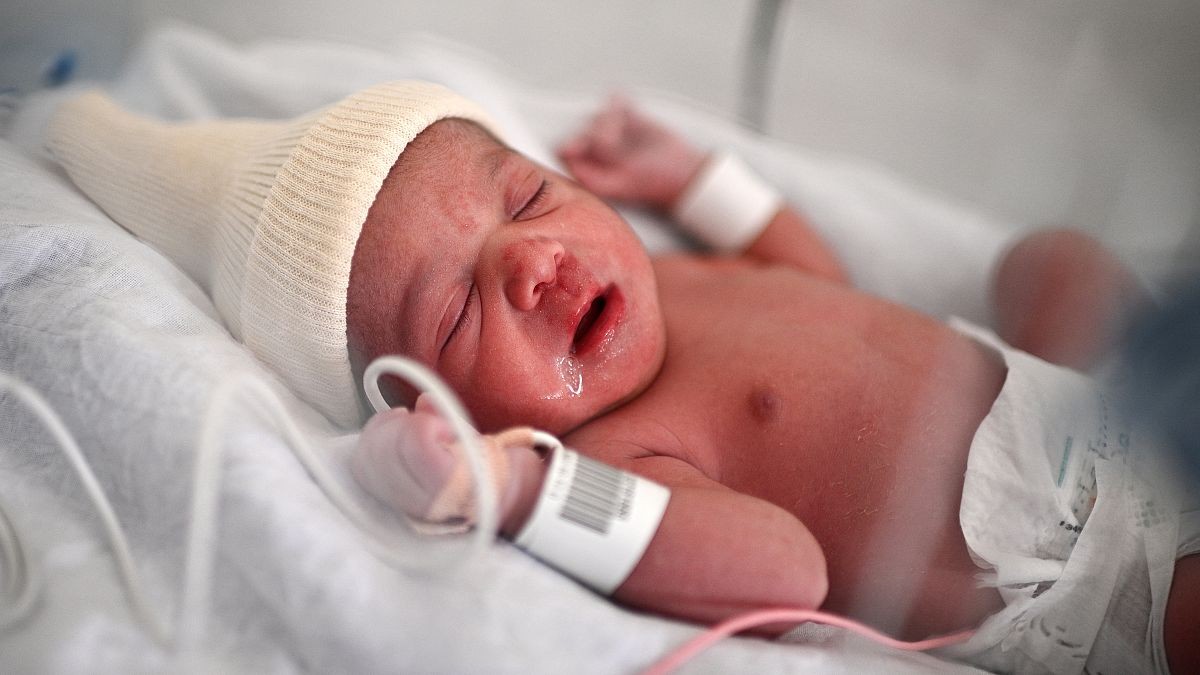
In the first six months of this year 2,200 babies were born and 2,221 persons died. Just over 1,400 babies were born to Maltese mothers. Around 700 babies were born to foreign mothers.
In the same period, we had more deaths than births and we have become ever increasingly a country with more coffins than baby cots where nappies are used more for the elderly than for babies.
Our population has been shrinking since at least 1975 when the fertility rate was 2.1: the rate needed to keep the population stable. Once women start having less than two babies each, the population starts to decline.
Our birthrate is among the lowest in the world: 1.06. This is 0.7 for Maltese mothers (less than one child per mother) as one third of babies are born in Malta to foreign mothers.
To reverse our demographic decline we need each mother to have three babies. It is estimated that it will take 60 years to stop, and then recover from our demographic decline.
Our fertility rate for the last 70 years every 10 years has been: 1955 (4.0), 1965 (2.4), 1975 (2.1), 1985 (1.9), 1995 (1.7), 2005 (1.3), 2015 (1.3) and 2025 (1.06).
Bringing in robots
More than half the countries of the world have a fertility rate of less than 2.1 and their populations are shrinking. Women in these countries are having less babies because they have access to contraception. They want to feel fulfilled, continue studying and have a career and not stay at home bringing up children. Parents also say that it is too expensive to have children and give them a good life. They also say that they have to work hard and a family of five struggles to make ends meet, pay the bills and afford accommodation that has become exorbitantly high.
Sixty years after Independence we are talking again of overpopulation, this time because of the 120,000 foreign workers who make up a third of our workforce, together with those who have families here, make up a quarter of our population of over 574,000 people. This makes Malta one of the world’s most densely populated countries. The feeling of being overcrowded is further exasperated by the increasing number of tourists visiting the islands – over 3.49 million up to October.
Our native population is set to decline to around 300,000 during this century while the workforce is expected to reach 462,000 workers by 2050, where two out of every three workers, will come from overseas (323,000).
In a number of crucial economic sectors we already have more foreign workers than Maltese nationals. For example 65 per cent of workers in accommodation and food services are foreign, and 58 per cent in arts, entertainment and recreation. In construction, foreign workers make up just over half (55 percent) and 51 per cent in administrative and support services. Foreign workers have become indispensable when it comes to care for the elderly, in public cleansing and in hospitals.
Complaints continue that we are overcrowded, Malta is overbuilt and the Maltese are strangers in our own country . These concerns must be taken seriously. How many people can Malta support given our natural resource limits, without degrading the natural social, cultural and economic environment for present and future generations?
This is not an easy question to answer. Those who say glibly that we need a new economic model built on a smaller or more skilled/efficient workforce producing more with less people should explain clearly how this can be done.
Countries with strong service sectors like Malta find it impossible to replace workers with automation and AI. We need strategic economic and workforce planning. Where possible we should go for high tech solutions and higher skilled labour. However even countries like the Netherlands, South Korea and Japan with all their advanced technology feel that, albeit reluctantly, they have to turn to importing foreign workers to address labour and skills shortages. Automation and labour-saving technologies offer partial relief, but acute labour shortages persist in key industries, especially healthcare, construction, and manufacturing.
We face tough challenges to ensure that Malta is a liveable country with a decent quality of life where we manage to build a common home for ourselves and for those who come from other countries to work here.
Times of Malta 19 December 2025