
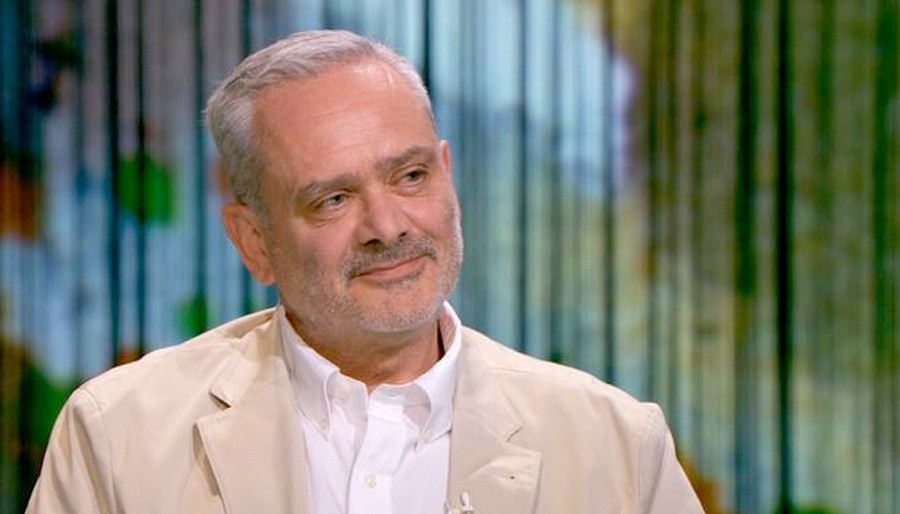
As of January 2026, EU sanctions have taken effect disrupting Jacques Baud’s daily life by freezing his assets within the Euro zone and prohibiting EU citizens and companies from making financial transactions with him. An EU and Schengen Area- wide travel and transit ban has been imposed on him. The main publisher of his books is based in France and he cannot receive payments from EU entities. Costas Lapavitsas, a professor at the School of Oriental and African Studies (SOAS) in London says: “Although the regulation allows minimal subsistence payments, the effect is to paralyse a person economically and professionally.”
This 70 year old Swiss citizen lives in Brussels and has worked in senior positions for the Swiss Strategic Intelligence Service, the United Nations and NATO. He cannot travel. He cannot access his bank accounts. It is a crime to sell him groceries, to take in his shirts, to repair his car. As a writer, his ability to publish is severely restricted.
The EU has appointed itself prosecutor, judge, jury, and executioner and accumulated all powers from accusation to punishment, without accountability or impartiality.
Baud has not been charged with any crime. Last December The Official Journal of the European Union declared that Baud is being sanctioned by the EU for acting “as a mouthpiece for pro-Russian propaganda and … conspiracy theories” regarding the Ukraine war. No evidence has been presented to back this accusation. He has not faced any judicial process and he has been given no opportunity to defend himself.
Whether or not one agrees with Baud’s evidence-based analysis on the Ukraine war, he is being punished for dissenting with the EU official narrative on the war in Ukraine. Anyone who does likewise, risks the same punishment. Holding an opinion that challenges the EU’s official narrative has become a crime.
Even the various inquisitions set up from late 12th century to mid-18th century in Europe to counter heresies and persecute those who were not ready to conform with the only established truths, allowed the accused to defend themselves, although in a very restrictive framework. The 21st century Brussels inquisition considers such a restricted right superfluous although it boasts of being a champion of freedom of expression.
The right to disagree
In its Guidelines on Freedom of Expressions it declares: “Everyone has the right to hold opinions without any kind of interference. This right also includes the right to change an opinion whenever and for whatever reason a person so freely chooses. No person may be subject to the impairment of any rights on the basis of his or her actual, perceived or supposed opinions. Any form or effort to coerce someone to hold or not an opinion is prohibited. All forms of opinion are protected, including opinions of a social, political, scientific, historic, moral and religious nature. States may not impose any exceptions or restrictions on the freedom of opinion nor criminalise the holding of an opinion.”
Article 11 of the Charter of Fundamental Rights of the European Union proclaims: “Everyone has the right to freedom of expression. This right shall include freedom to hold opinions and to receive and impart information and ideas without interference by public authority and regardless of frontiers.”
Article 21 states: “Any discrimination based on any ground such as sex, race, colour, ethnic or social origin, genetic features, language, religion or belief, political or any other opinion, membership of a national minority, property, birth, disability, age or sexual orientation shall be prohibited.”
Article 47 includes: “Everyone is entitled to a fair and public hearing within a reasonable time by an independent and impartial tribunal previously established by law. Everyone shall have the possibility of being advised, defended and represented.”
Article 48: “Everyone who has been charged shall be presumed innocent until proved guilty according to law.”
In 2015 following the 7 January killing of the staff at the offices of the French satirical weekly newspaper ‘Charlie Hebdo’, the EU mobilised millions across its member states to support freedom of expression under the rallying cry “Je suis Charlie’.
But now the EU censors and persecutes those who dare to think and express themselves differently.
A study in The Lancet (October 2025) estimates that unilateral sanctions by the US and EU are associated with over 500,000 deaths annually, totaling around 38 million deaths between 1970 and 2021, with children and the elderly being most vulnerable, far exceeding direct war casualties. The EU is now also killing freedom of expression through its sanctions.
Like the soldiers marching to their death in ‘The Charge of the Light Brigade’ it expects us: “… not to reason why … but to do and die.”
Repression and lawlessness is replacing freedom of expression and the rule of law. The EU wants us to accept the fate of the anonymous person in Franz Kafka’s short story ‘Before the law’: “Before the law sits a gatekeeper. To this gatekeeper comes a man from the country who asks to gain entry into the law. But the gatekeeper says that he cannot grant him entry at the moment.,,
“I am powerful. And I am only the most lowly gatekeeper. But from room to room stand gatekeepers, each more powerful than the other. I can’t endure even one glimpse of the third.” The man from the country has not expected such difficulties: the law should always be accessible for everyone, he thinks …”
In this short story Kafka denounces inaccessible authority, bureaucracy, and societal barriers, showing how individuals get trapped by complex rules, ultimately wasting their lives waiting for permission that’s always just out of reach, and preventing them from being actively democratic citizens in a vibrant democracy.
Resorting to sanctions like the ones imposed on Jacques Baud and putting itself above the law, the EU executive has turned itself into Kafka’s Castle’ that wants to crush those individuals who struggle against its labyrinthine bureaucracy, hidden behind an impenetrable, inscrutable, and overwhelming system of power ruling by decree.
Times of Malta 16 Januray 2026